The Best Shoe Styles for Petite Women Who Want to Look Taller

The relationship between footwear and perceived height is more nuanced than simply adding a heel. Toe shape, vamp depth, strap placement, and colourway all contribute to whether a shoe elongates the leg line or interrupts it.
The assumption that petite women need to wear the highest heel available to appear taller is one of the more persistent and less useful pieces of fashion advice in circulation. Height alone is not the mechanism that produces the visual effect most petite women are seeking. The effect comes from proportion and line, specifically from choosing footwear that creates a continuous, uninterrupted line from hip to toe rather than one that visually divides the leg at an unflattering point.
Understanding this distinction changes the way shoe selection works for petite frames. A flat in the wrong style can shorten the leg line more than a modest heel in the right one. An ankle strap at the wrong width can make the leg appear to end before it actually does. And a colourway that contrasts sharply with the skin tone can create a visual break that reduces the apparent length of the leg regardless of how high the heel is.
The styles that consistently work for petite women are those that work with the principles of line and proportion rather than fighting them.
The Principle Behind the Proportions
Before identifying specific styles, it helps to understand the visual mechanics that determine whether a shoe is flattering for a petite frame.
The eye follows uninterrupted lines upward. A shoe that creates a clean, continuous visual connection between the foot and the leg reads as elongating. A shoe that interrupts that line, with a wide ankle strap, a contrasting colourway, or a toe box shape that reads as heavy or wide, creates a visual stopping point that shortens the apparent length of the leg.
As SAS for Short’s detailed guide to the most flattering shoe styles for petites notes, toe shape matters more than most people realise. A pointed or softly almond-shaped toe visually extends the leg line even in a flat, creating a longer, leaner look without adding extra height. Very round or wide square toes can shorten the appearance of the foot and make the leg look more compact, regardless of heel height.
The vamp, the part of the shoe that covers the top of the foot, follows similar logic. A lower vamp shows more of the foot’s surface and creates the illusion of length. This is why some flats look chic and elongating while others feel heavy: the difference is often a matter of how much of the foot is visible.
The Styles That Work Consistently
Pointed-Toe Heels
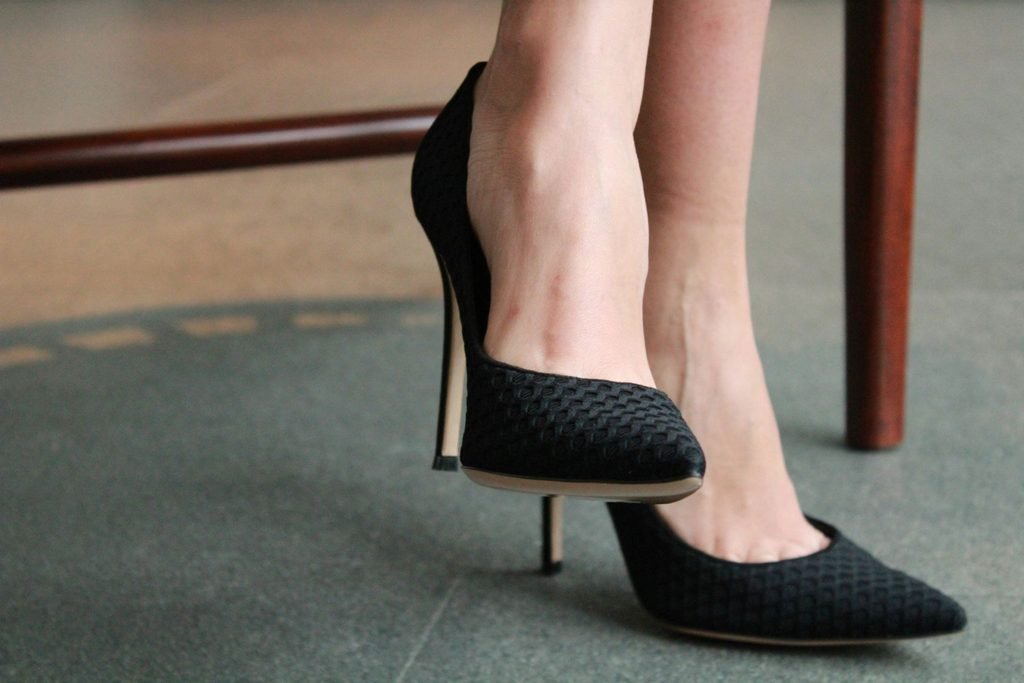
The pointed-toe heel is the single most consistent recommendation for petite women seeking to appear taller, and the reasons are structural rather than arbitrary. The pointed toe extends the visual line of the foot forward, creating the impression that the leg continues beyond where it actually ends. Combined with a heel that adds genuine elevation, the effect on the leg line is more significant than a round-toe heel at the same height.
Court shoes and pumps in a pointed-toe silhouette are particularly effective because they combine the elongating toe shape with a clean upper that shows a generous amount of the foot’s surface, maintaining the continuous leg-to-foot line that creates the perception of height.
Nude or skin-tone colourways amplify this effect by eliminating the visual boundary between the shoe and the foot, creating a seamless extension of the leg line that reads as considerably taller than the actual elevation involved.
Kitten Heels and Slingbacks
The kitten heel deserves considerably more credit than it typically receives in the petite styling conversation. At two to four centimetres, it provides genuine elevation without the physical demands of a higher heel, while its low, slender profile reads as refined rather than casual.
Slingback kitten heels are a particularly strong choice for petite women because the absence of a back strap around the ankle allows the leg line to extend uninterrupted to the toe. As Who What Wear’s fashion editor guide to the best shoes for petites notes, low-heel slingbacks with a pointed toe are practically designed for petite proportions: the mini heel gives extra height, the court shape elongates the legs, and the lack of ankle strap keeps the leg line uninterrupted.
Wedges and Platform Styles
Wedge heels and platform shoes add genuine elevation while reducing the inclination angle between the foot and the floor, making them considerably more comfortable to wear for extended periods than equivalent stiletto heights. For petite women who want height without the physical toll of a high stiletto, the wedge is a practical and visually effective solution.
Platform styles, which became a fashion staple in the early 2000s and have returned to relevance in recent seasons, offer the additional advantage of adding height at both the toe and heel, maintaining a more natural foot angle while still achieving significant overall elevation. For petite women, a platform sandal or court shoe in a monochromatic colourway can add three to five centimetres of visible height while remaining genuinely wearable across longer periods of wear.
Minimalist Strappy Sandals
The barely-there strappy sandal is one of the most effective flat or low-heeled options for petite women because it reveals the maximum amount of foot surface. With minimal coverage of the foot, the eye reads the leg line as continuing almost to the ground rather than being interrupted by a substantial upper. Thin straps in a colourway that matches either the skin tone or the outfit maintain the continuity of the leg line in a way that wider straps or contrasting colours do not.
The key selection criterion for strappy sandals on a petite frame is strap width and placement. Very thin straps across the forefoot and a single ankle strap positioned at the narrowest point of the ankle, rather than mid-ankle, are the most flattering configuration. Wide straps across the ankle or multiple horizontal straps up the foot and calf create the visual interruptions that work against the elongation petite women are seeking.
Ankle Boots in Tonal Colourways
Ankle boots present a specific challenge for petite frames because the shaft of the boot creates a horizontal line at the ankle that can visually shorten the leg if the colourway contrasts with the outfit worn above it. The solution is tonal dressing, wearing the ankle boot in a colourway that matches or closely coordinates with the trouser, tight, or skirt worn with it.
A black ankle boot with black trousers creates a continuous dark line from hip to foot that reads as considerably longer than the same boot worn with a contrasting outfit. This principle applies across colourways: a tan boot with beige or camel trousers achieves the same elongating effect.
The Styles to Approach With Care
Certain shoe styles consistently work against the proportions of a petite frame, and awareness of these allows petite women to make more informed decisions when they encounter them.
Wide ankle straps create a horizontal band across the ankle that visually cuts the leg line at that point. Fine or delicate ankle straps placed at the narrowest part of the ankle are considerably more flattering than wide bands at mid-ankle.
Gladiator sandals with lacing up the calf interrupt the leg line with multiple horizontal crossings that divide a relatively short leg into even shorter visual sections. As Anchored In Elegance notes in their petite shoe guide, flat gladiator sandals have a shortening effect on petite frames specifically because all that lacing visually cuts the leg at multiple points.
Very round or heavy toe boxes read as visually heavy and wide at the foot, creating the impression of a wider, shorter leg. This applies to both flats and heels: the toe shape has as much influence on the leg line as the heel height.
Sharp colour contrasts between shoe and outfit create a visual stopping point at the foot that interrupts the upward reading of the leg line. Shoes that blend with the outfit’s colourway or with the skin tone produce a more elongated visual effect than those that stand in sharp contrast.
Billini and the Petite-Friendly Silhouette
Billini’s sandal and heel range consistently includes styles that align with what works for petite frames: pointed-toe silhouettes, strappy barely-there sandals, kitten heels, and block heels in clean, minimalist designs across neutral and seasonal colourways.
The brand’s design philosophy, which leans toward contemporary silhouettes with restrained embellishment, produces shoes that read as elongating rather than heavy, and that work across the range of outfit types petite women navigate across their weekly wardrobe. The Brand House Direct Billini collection covers the full range of the brand’s women’s shoes and sandals, from strappy occasion heels through to everyday flat sandals, making it a practical starting point for petite women building a wardrobe of styles that consistently flatter their proportions.
The Confidence Variable
The most effective shoe for any woman, petite or otherwise, is one she feels genuinely confident wearing. The styling principles outlined above are guides rather than rules, and their value is only realised if the shoe is worn with the comfort and ease that comes from genuine confidence in the choice.
Petite women who understand which shoe shapes work with their proportions, and why, are better positioned to apply that knowledge selectively rather than rigidly. A wide-strapped sandal worn with conviction in the right outfit context will often work better than a technically elongating shoe chosen joylessly. The principles provide a framework. How they are applied remains personal.
Women with specific foot fitting requirements, including narrow or wide feet, high arches, or the need for orthotic support, are encouraged to check width options and insole specifications before purchasing, as styling preferences and fit requirements are both relevant to finding a shoe that genuinely works.