Who can qualify for Polish citizenship through descent and how to verify your roots
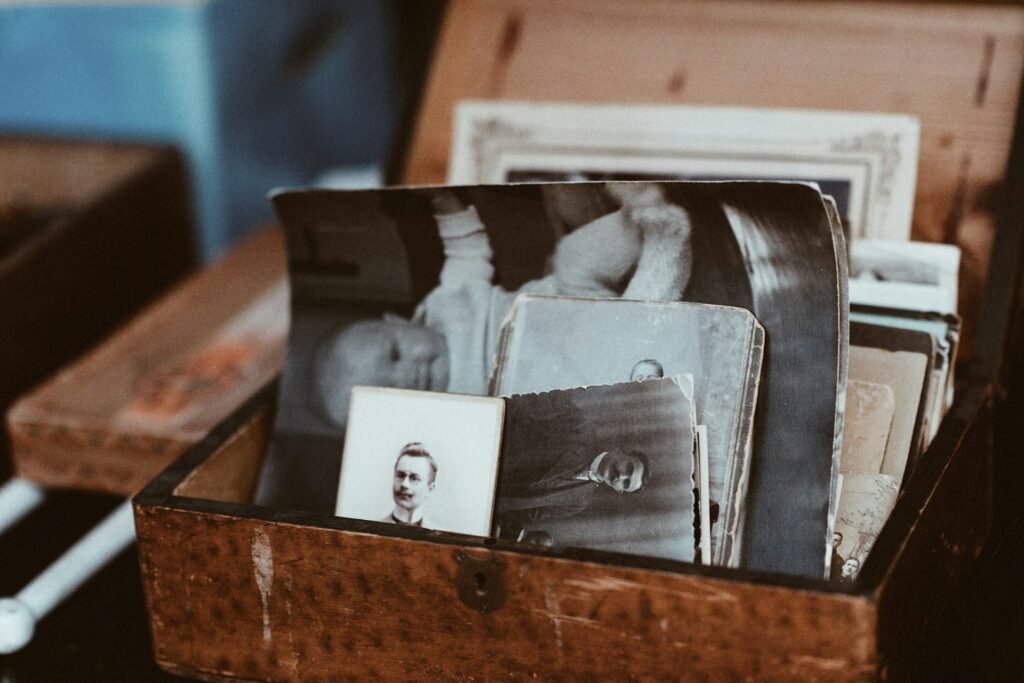
For many people, uncovering Polish roots is both a legal inquiry and a deeply personal journey. It often starts with a family story, a surname on a ship manifest, or a faded passport photo—and quickly becomes a puzzle of dates, laws, and documents spread across borders. Polish citizenship by descent can open doors in the European Union, yet its rules are precise and historically sensitive. Approaching the process with clarity, patience, and empathy can make a significant difference, especially when family histories include migration, war, or name changes.
Who can qualify for Polish citizenship by descent?
Poland follows the principle of ius sanguinis (citizenship by blood). That means citizenship is typically transmitted from parent to child. If at least one parent was a Polish citizen on the day their child was born, that child is usually a Polish citizen—provided no legal event interrupted or broke the chain of citizenship in earlier generations.
The core rule in simple terms
- You do not “apply for” Polish citizenship by descent; you ask the state to confirm what you already hold, if the legal chain from an ancestor to you remains intact.
- The key test is whether an ancestor held Polish citizenship, and whether it legally passed through each generation without being lost.
- Loss of citizenship in earlier decades was possible in certain circumstances (for example, some naturalizations abroad), so the facts and dates matter.
Why timelines matter: historical benchmarks to consider
Poland’s citizenship rules evolved over time. Without reproducing the full legal codes, here are practical checkpoints that often shape eligibility:
- Before 1951: Under earlier laws, the father’s status commonly determined a child’s citizenship, with nuances for cases where the father was unknown or the child was born out of wedlock. Some actions—such as acquiring a foreign nationality, serving in a foreign army, or holding foreign public office without permission—could trigger loss of citizenship for the person concerned and, in certain scenarios, influence transmission to minor children.
- From 1951 and later (including the 1962 and 2009 acts): Both parents became relevant to transmission, and the rules around loss changed significantly. Modern law does not permit automatic loss; renunciation requires formal consent from the Polish President. However, events that occurred prior to these reforms can still affect today’s cases.
- Territorial changes (especially around 1918 and post–World War II): If an ancestor lived in areas that changed borders (e.g., today’s Ukraine, Belarus, Lithuania), determining whether and when they were recognized as Polish citizens can require extra steps.
In practice: If your parent was a Polish citizen when you were born, you likely qualify. If your connection is via a grandparent or great-grandparent, qualification depends on whether each person in the chain—ancestor, their child, and so on—held and transmitted Polish citizenship at the relevant times.
How to verify your roots and legal continuity
Verification is a two-part exercise: genealogical (who, where, when) and legal (what law applied at each point). A structured approach helps:
Step-by-step approach
- Define your qualifying ancestor (parent, grandparent, great-grandparent) who was Polish. Pin down their full name(s), dates, and places of birth, marriage, and residence.
- Build a dated life timeline for the ancestor and each subsequent generation: births, marriages, emigration, naturalization abroad, military service, public employment, and any known name changes.
- Locate proof of Polish citizenship or residence at the crucial times: Polish passports, prewar or postwar ID cards, military booklets, księgi meldunkowe (residence registrations), voter lists, or Polish court/administrative decisions.
- Check for foreign naturalization and its exact date. Naturalization certificates, oath records, and index entries (e.g., in U.S., Canadian, Australian, or Argentine archives) are essential to rule in or out a loss of Polish citizenship in earlier decades.
- Collect civil status documents linking generations: birth and marriage certificates for you, your parents, and the ancestor. Make sure names, dates, and places align across documents or are explained with evidence.
- Corroborate borderland cases with archives in present-day countries where records may now reside. Parish books and regional state archives can be decisive.
When you need practical strategies for sourcing Polish and diaspora records, you can find a concise overview here: https://fivetoeurope.com/research/. It is especially useful if your family timeline crosses multiple jurisdictions or wartime disruptions.
Where to find the documents
- Polish Civil Registry Offices (Urząd Stanu Cywilnego): Birth, marriage, and death records within the protected timeframes (generally the last 80–100 years) are maintained locally in Poland. Requests usually require proof of kinship.
- Polish State Archives (Archiwa Państwowe): Older vital records and residence registers. Research tools include national archival portals and regional inventories. Some scans are available online.
- Parish and diocesan archives: Church registers can bridge gaps when civil records are missing or predate civil registration.
- Foreign repositories: Naturalization files, ship manifests, military records, and refugee/DP camp documentation can be found in U.S. NARA/USCIS, Library and Archives Canada, the UK National Archives, Arolsen Archives, or regional counterparts.
- Holocaust and wartime sources: Yad Vashem, the Polish Institute of National Remembrance (IPN), and Red Cross tracing services can provide context and corroboration in complex cases.
Handling name variants and territorial shifts
- Expect spelling variation. Document Slavic, German, Yiddish, Lithuanian, or Ukrainian variants of place names and surnames; create a reference list to avoid missed matches.
- Map historical jurisdictions. A village might have been registered under a different county, partition, or state—check gazetteers from the relevant era.
- Explain discrepancies proactively. If a birth date differs by a year across records, attach a reasoned note and any corroborating evidence.
Documents and the confirmation process
To have your citizenship recognized, you typically apply for a Confirmation of Possession of Polish Citizenship (Potwierdzenie posiadania obywatelstwa polskiego) with the competent voivode in Poland or via a Polish consulate.
What you will usually need
- Your civil status documents (birth, marriage if applicable).
- Your parent’s documents and, if needed, grandparent’s or earlier ancestor’s documents, establishing the family chain.
- Evidence of the ancestor’s Polish citizenship (Polish passport, ID, military records, residence registers, or older administrative decisions).
- Proof regarding foreign naturalizations (certificates or negative searches) to confirm no loss occurred before the next generation’s birth.
- Translations by a sworn translator in Poland and apostilles or legalizations for foreign-issued documents.
Filing, timelines, and outcomes
- Where to file: Directly with a voivodeship office in Poland (often Mazowieckie, especially for applicants abroad) or through a Polish consulate.
- Processing time: Several months is typical; complex or borderland cases can take longer, especially if archive outreach is needed.
- Decision and next steps: If confirmed, you can proceed to obtain a Polish birth record transcription (if born abroad), a PESEL number, and a passport. If the decision is negative, an appeal path exists within administrative procedure.
Practical examples
- Case A: Parent route, straightforward. Your mother was born in Poland in 1975, emigrated in 2000, and naturalized abroad in 2010. You were born in 2005. Because she was still a Polish citizen at your birth, you generally qualify. Evidence: her Polish passport or ID valid at the time of your birth, plus your birth certificate.
- Case B: Grandparent route with pre-1951 issues. Your grandfather was born in Lwów in 1910 (then in Poland), emigrated in 1929, and naturalized in the U.S. in 1938. Your parent was born in 1940 abroad. Depending on the precise laws then in force and the grandfather’s actions, the 1938 naturalization might have caused a loss of Polish citizenship for him and may have affected transmission to your parent. You would need a careful legal analysis of the 1920-act regime and corroborating documentation.
- Case C: Borderland records and name variations. A great-grandmother from today’s Belarus appears under Polish and Russian versions of her name across documents. Combining parish registers, residence lists, and a postwar Polish ID card, you demonstrate she remained a Polish citizen after WWII, and that the line down to your parent is continuous.
Emotional, organizational, and financial considerations
Beyond legalities, the process can be emotionally significant. Uncovering a grandparent’s wartime path or a lost family branch may be healing but also heavy. Give yourself time, and set a pace that respects your well-being. Consider discussing findings with relatives sensitively; not every family member will want the same level of detail.
- Organization: Create a digital folder structure, use consistent file names (YYYY-MM-DD_Place_Name_DocumentType), and maintain a timeline spreadsheet with sources and links.
- Budgeting: Account for archive fees, certified copies, apostilles/legalizations, sworn translations, courier costs, and potential research assistance. Spreading costs across project phases can help.
- Data protection: Store scans securely, redact sensitive identifiers when sharing drafts, and comply with archive usage terms.
- Well-being: If the research touches on trauma, set boundaries. Brief breaks and support from community or professionals can make the journey more sustainable.
Common pitfalls and how to avoid them
- Relying on family lore without documents: Treat stories as leads, not proof. Always seek primary records.
- Underestimating date precision: A difference of months can change the applicable law or whether a parent had already naturalized abroad.
- Ignoring name and place variants: Search all plausible spellings and historical jurisdictions to avoid false negatives.
- Submitting incomplete applications: Provide a coherent set of documents with translations and apostilles. Add a concise cover note explaining the family chain and any anomalies.
- Skipping negative searches: When foreign naturalization is unclear, obtain official “no record found” confirmations where available.
When to seek tailored guidance
Because older rules were different and border histories are complex, individual facts determine outcomes. Specialized guidance can streamline research, interpret findings under the correct legal period, and communicate with Polish offices or archives. If you choose to work with a professional, look for transparent methods, clear evidence standards, and realistic timelines; reputable firms, including Five to Europe, can help align genealogical facts with legal requirements without overpromising results.
Conclusion
Polish citizenship by descent demands both heart and rigor. The heart is what drives us to reconnect with family origins; the rigor ensures that dates, documents, and legal criteria are aligned. By defining a qualifying ancestor, mapping a precise timeline, and assembling reliable records, you give decision-makers the evidence they need to confirm your status. Reflect on what you hope to rediscover along the way, and consider deepening your understanding through further reading or professional jurisprudential insight. Even when the path traverses difficult family histories, a careful, respectful approach can honor the past while opening possibilities for the future.